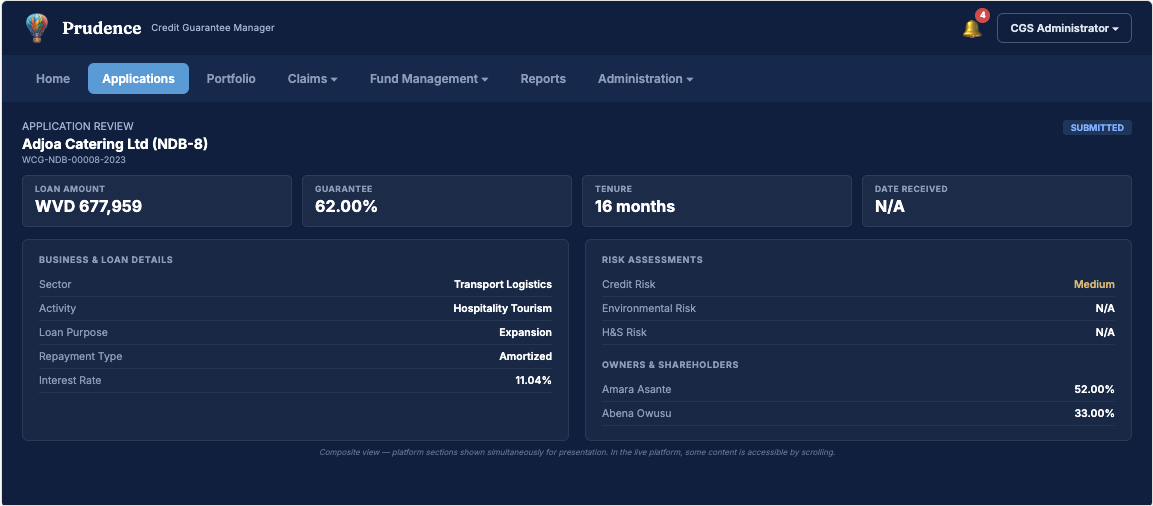
Centralize and manage data related to borrowers, lenders, guarantees, claims, and financial performance.
Operational Efficiency:
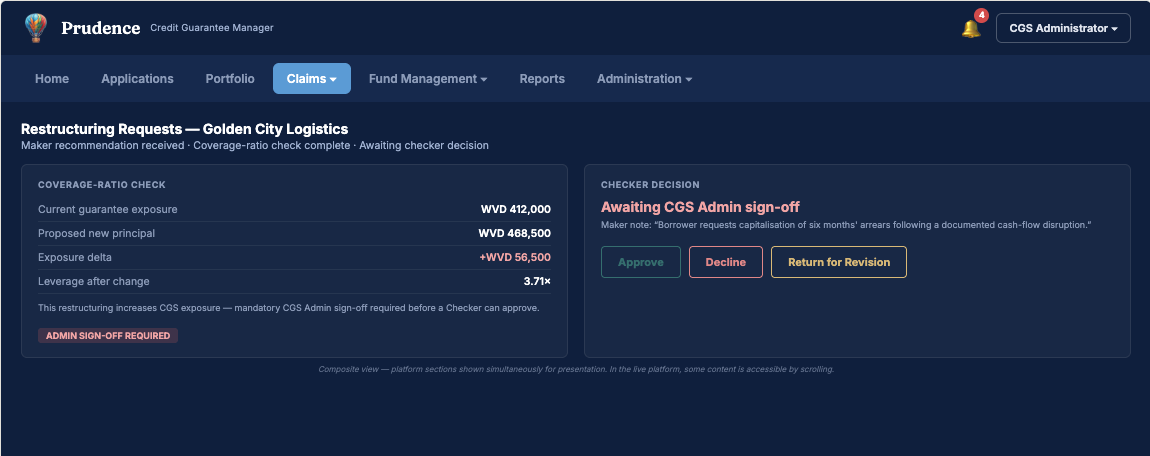
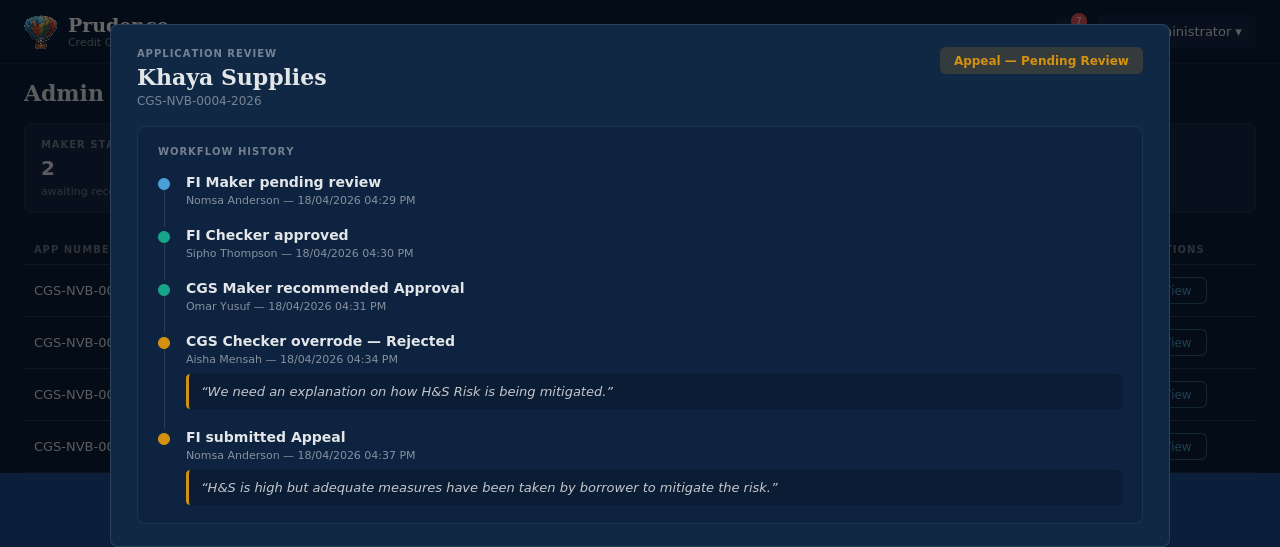
Automate workflows for guarantee approvals, monitoring, and claims processing.
Decision Support:
Provide real-time insights and analytics for informed decision-making.
Compliance and Reporting:
Ensure accurate and timely reporting to stakeholders, including regulators and policymakers.
Risk Monitoring:
Track risks at the borrower, lender, and portfolio levels.
Secure and scalable databases to store borrower information, guarantee details, and claims history.
Data Integration:
Integrate with external systems, such as lenders’ credit systems and credit bureaus, for seamless data exchange.
Data Validation:
Implement mechanisms to ensure data accuracy and integrity.
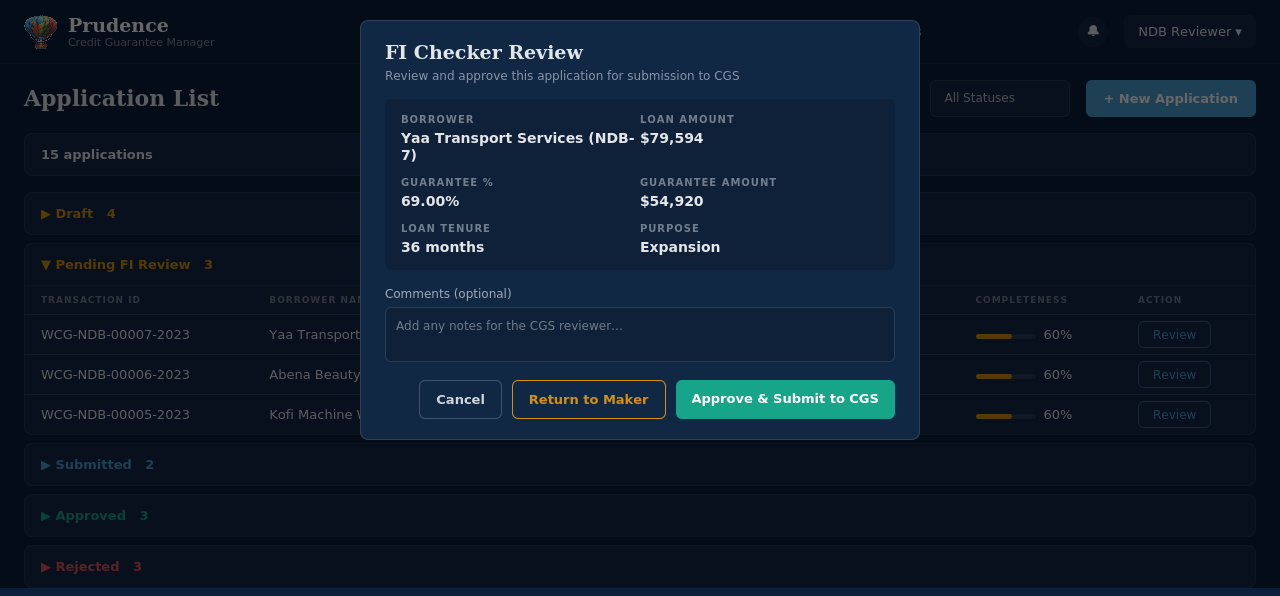
- Digital platforms for lenders to submit applications and supporting documents.
- Automated eligibility checks based on pre-defined criteria.
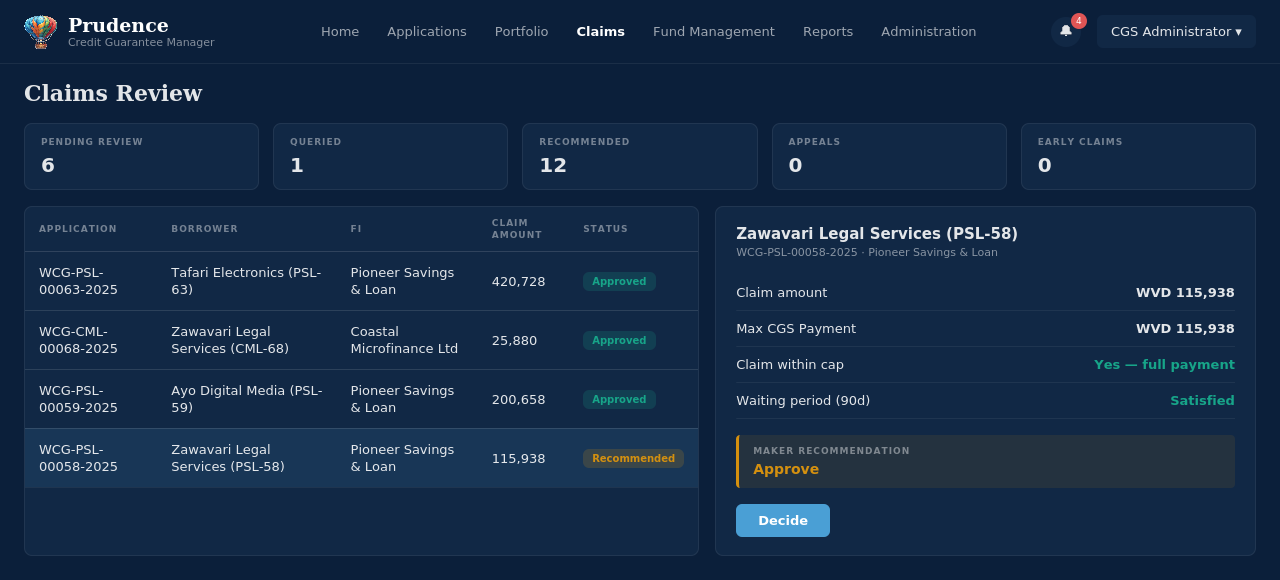
Claims Processing:
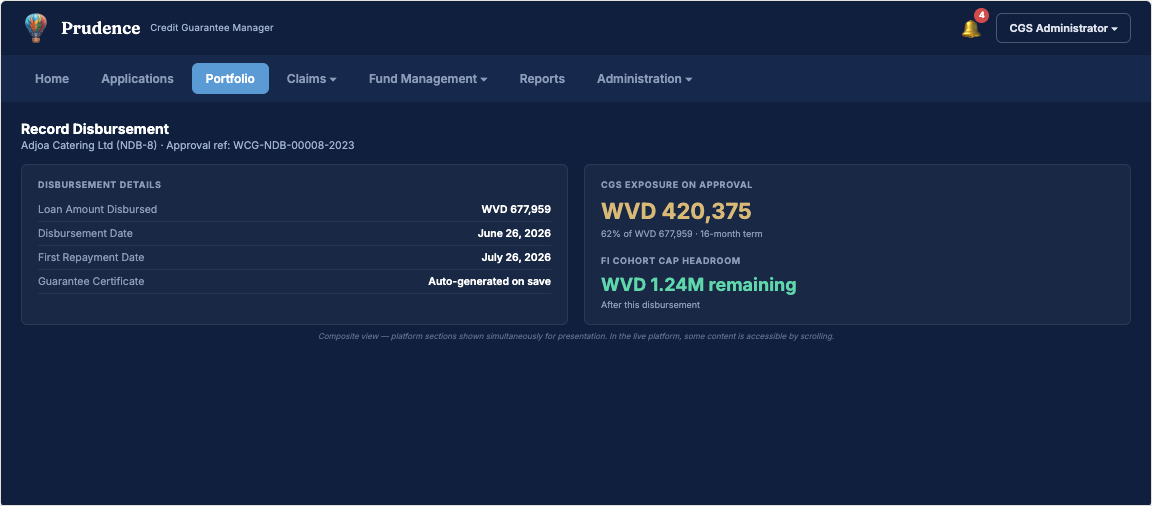
- Automated workflows for claim submission, validation, and payment.
- Status tracking for claims in real-time.
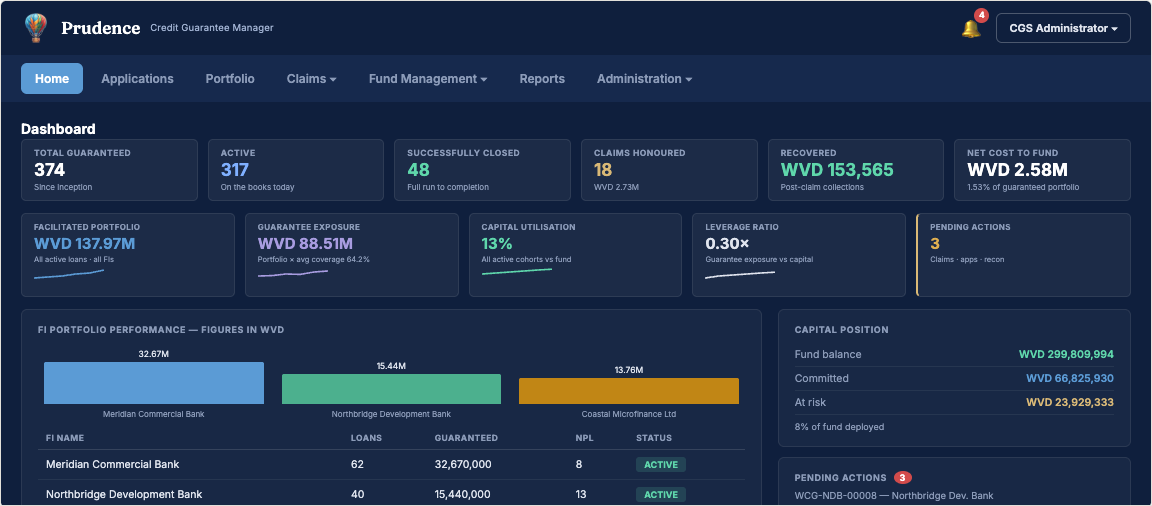
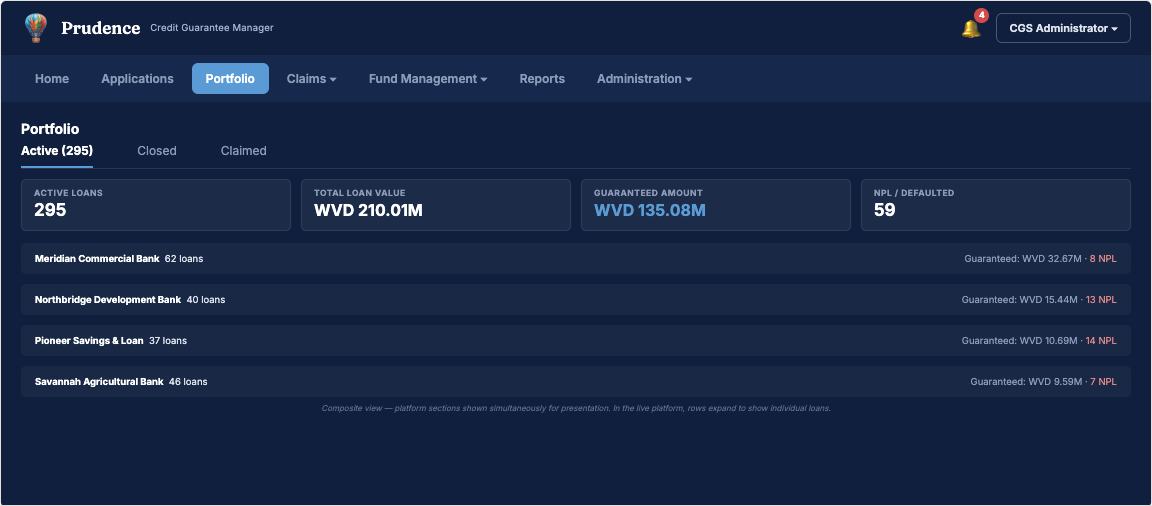
Portfolio Monitoring:
Tools for tracking loan performance, defaults, and recovery efforts.
Real-time dashboards displaying key metrics such as guarantee utilization, default rates, and financial status.
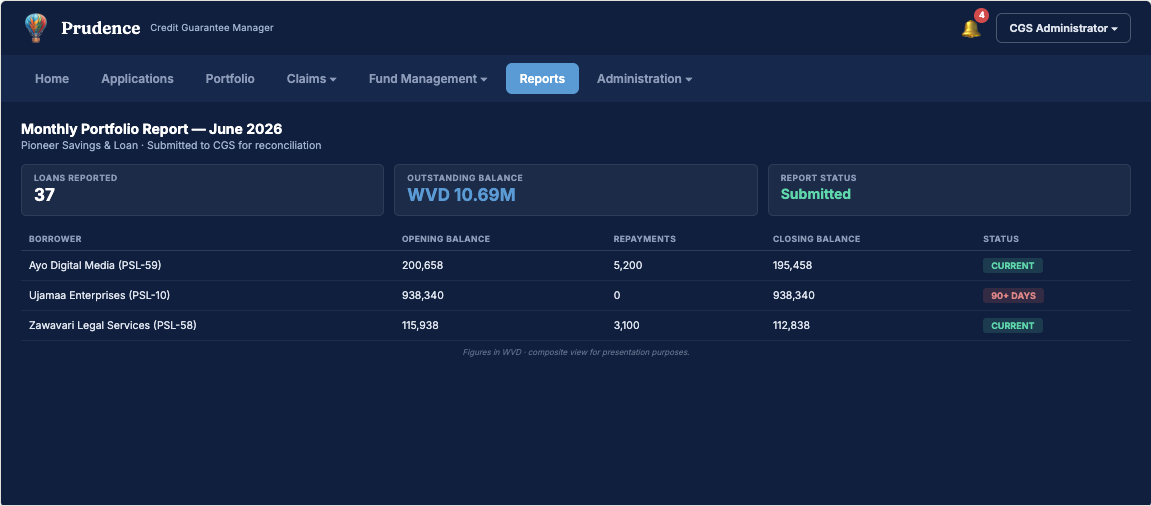
Standard Reports:
Regular reports for internal management, lenders, and regulators.
Advanced Analytics:
- Predictive models to assess risks and forecast trends.
- Impact analysis to measure the scheme’s economic and social contributions.
Intuitive and easy-to-use systems for stakeholders, including internal staff and lenders.
Role-Based Access Control:
Define access rights based on user roles (e.g., administrators, lenders, auditors).
Customizable Workflows:
Adapt workflows to the unique operational needs of the scheme.
Real-Time Updates:
Ensure real-time synchronization of data for accuracy and timeliness.
Scalability:
Allow for expansion to accommodate growing volumes of data and users.
Integrate risk scoring models to evaluate borrower creditworthiness and lender performance.
Early Warning Systems:
Alerts for loans at risk of default based on payment patterns or financial health.
Stress Testing:
Simulate adverse scenarios to assess portfolio resilience.
Ensure systems meet local and international standards for data privacy, reporting, and financial management.
Data Security:
- Implement encryption, firewalls, and access controls to protect sensitive information.
- Regular audits to identify and address vulnerabilities.
Disaster Recovery:
Develop backup and recovery protocols to safeguard data and ensure business continuity.
Provide secure portals for lenders to manage applications, track guarantees, and submit claims.
Borrower Integration:
Tools for borrowers to track loan statuses and access support services.
Government and Donor Reporting:
Automated generation of reports for funding agencies, policymakers, and other stakeholders.
Use cloud platforms for scalability, cost efficiency, and remote access.
Interoperability:
Ensure the MIS integrates with external systems like banking platforms, credit bureaus, and government databases.
Mobile Access:
Provide mobile-friendly systems for on-the-go access by field officers and lenders.
AI and Machine Learning:
Leverage AI for credit scoring, fraud detection, and risk assessment.
Guarantee utilization rate, default rate, claim settlement time, and portfolio at risk.
Audit Trails:
Maintain detailed logs of all transactions and system changes for accountability.
Feedback Mechanisms:
Collect user feedback to improve system functionality and user experience.
Engage stakeholders in the design and testing phases to ensure the system meets their needs.
Training:
Provide training for users, including lenders and internal staff, on system operations.
Regular Updates:
Keep the system updated with new features, security patches, and compliance requirements.
Support Services:
Offer technical support to address user issues promptly.
Use analytics to refine risk models and operational strategies.
Feedback Loops:
Regularly update the system based on user feedback and technological advancements.
Adaptability:
Modify the MIS to respond to changes in market conditions, regulatory environments, or policy priorities.